
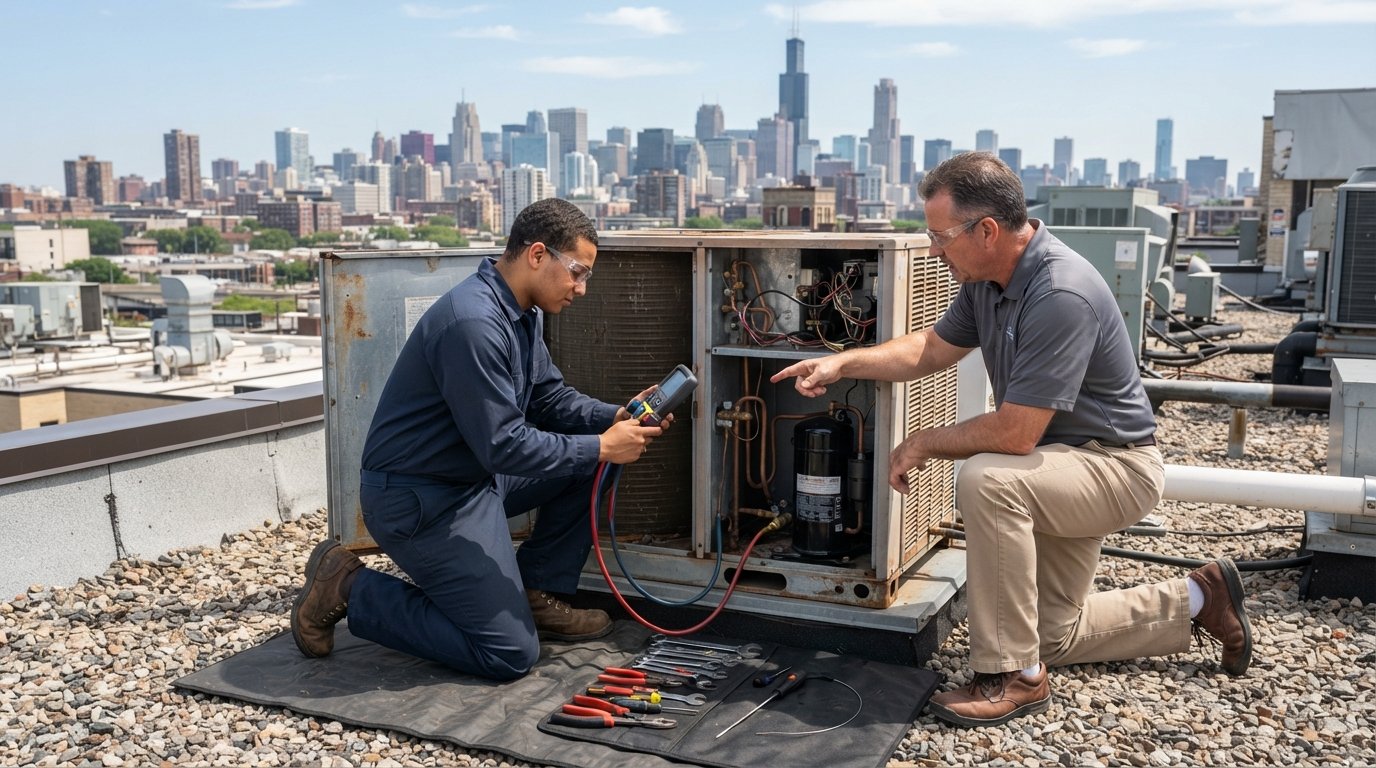
HVACR Engineering Technology Associate Degree at CBT
Earn an HVACR associate degree in 2 years at CBT Technology Institute-Main Campus. Hands-on training for a stable, in-demand skilled trade career.
By James Morgan
Skilled trades are back in the spotlight, and few offer the job security, hands-on satisfaction, and steady demand of heating, ventilation, air conditioning, and refrigeration (HVACR) work. If you are searching for a fast, practical path into this growing field, the Heating, Ventilation, Air Conditioning and Refrigeration Engineering Technology/Technician Associate's degree, usually 2 years In-person at CBT Technology Institute-Main Campus deserves a close look. This program blends classroom theory with intensive lab practice, preparing you for entry-level roles that keep homes, offices, hospitals, and data centers comfortable and operational. Unlike purely online alternatives, the in-person format at CBT Technology Institute-Main Campus gives you direct access to instructors, tools, and troubleshooting scenarios you simply cannot replicate through a screen.
Why HVACR Technicians Are in Demand
Heating and cooling systems are no longer a luxury; they are essential infrastructure. As older equipment reaches the end of its life and new energy-efficiency standards take effect, the need for trained technicians who can install, maintain, and repair these systems continues to climb. The U.S. Bureau of Labor Statistics projects steady employment growth for HVACR mechanics and installers through the next decade, driven by construction activity, retrofits, and the rising complexity of climate control technology. Employers frequently report difficulty finding candidates who understand both mechanical fundamentals and modern digital controls.
That gap is exactly where an associate degree program adds value. While some technicians enter the trade through short certificate courses, a two-year degree signals a broader foundation: refrigeration theory, electrical schematics, airflow dynamics, and system design. Graduates are often positioned for faster advancement into roles such as lead installer, service supervisor, or building maintenance manager.
For adults considering a career change, the hands-on nature of HVACR work can be a refreshing alternative to desk-bound jobs. Each day brings different problems, different buildings, and different customers. If you enjoy diagnosing issues and seeing tangible results, this field offers a rare combination of independence and teamwork.
What the Associate Degree Program Covers
The Heating, Ventilation, Air Conditioning and Refrigeration Engineering Technology/Technician Associate's degree, usually 2 years In-person at CBT Technology Institute-Main Campus is structured to take you from foundational concepts to advanced troubleshooting. Coursework typically includes refrigeration principles, heating systems, air distribution, electrical circuits, and control systems. You will also study safety codes, environmental regulations, and best practices for handling refrigerants.
Because the program is delivered in person, a significant portion of your time is spent in labs working with actual equipment. This is critical. Reading about a compressor is not the same as diagnosing a faulty one under pressure. Instructors can watch your technique, correct mistakes in real time, and share field stories that illuminate why certain procedures matter. That kind of mentorship is hard to replicate in a fully online format.
Below are common components you can expect in a typical HVACR associate degree curriculum:
- Refrigeration and air conditioning theory: thermodynamics, pressure-temperature relationships, and system components.
- Electrical and control systems: wiring diagrams, motors, relays, thermostats, and building automation basics.
- Heating systems: furnaces, boilers, heat pumps, and combustion analysis.
- Installation and service procedures: ductwork, piping, brazing, evacuation, charging, and preventive maintenance.
- Code compliance and safety: EPA regulations, refrigerant handling, and workplace safety standards.
Many programs also include a capstone project or internship, giving you a portfolio of real work to show employers. At CBT Technology Institute-Main Campus, the in-person schedule allows for frequent interaction with career services, which can help with resume preparation, interview practice, and job placement support.
In-Person Learning at CBT Technology Institute-Main Campus
Choosing an in-person program is a deliberate decision. It requires commuting, fixed class times, and a commitment to being present. In return, you gain structure, accountability, and immediate feedback. For many adult learners, that structure is precisely what keeps them on track. The campus environment also fosters peer study groups and professional networking, which can lead to job leads before you even graduate.
CBT Technology Institute-Main Campus is known for its focus on career-oriented training. Class sizes are often smaller than at large community colleges, meaning instructors can give individual attention. Labs are equipped with trainers that simulate real-world systems, from residential split units to commercial refrigeration racks. You will practice diagnosing faults, reading gauges, and using meters in a controlled setting before you face a customer's emergency.
Another advantage of the in-person format is access to physical resources: tools, diagnostic software, and safety equipment. While online simulations have improved, they cannot fully replace the tactile experience of tightening a flare fitting or measuring superheat on a running system. Employers value graduates who can step onto a job site with confidence because they have already performed these tasks dozens of times in lab.
Admission Requirements and How to Apply
Admission to the Heating, Ventilation, Air Conditioning and Refrigeration Engineering Technology/Technician Associate's degree, usually 2 years In-person at CBT Technology Institute-Main Campus generally requires a high school diploma or equivalent. Some applicants may need to take a placement test or complete prerequisite courses in math and reading. Because the program is hands-on, a basic comfort with tools and mechanical concepts is helpful, but not mandatory; instructors start with fundamentals.
The application process usually involves submitting transcripts, completing an admissions interview, and discussing financial aid options. Prospective students should ask about start dates, program length, and whether evening or weekend classes are available for working adults. It is also wise to inquire about job placement rates and employer partnerships, as these can signal how well the program connects graduates with local HVACR companies.
If you are comparing this program to online alternatives, consider your learning style. If you thrive with direct instruction and hands-on practice, the in-person route may be worth the commute. If you need maximum flexibility due to work or family obligations, you might explore hybrid options or online HVACR technician certificates. For a broader look at how online degrees compare in structure and outcomes, see this guide on online master's in software engineering programs, which discusses flexibility and career returns in a different technical field.
Career Outcomes and Salary Expectations
Graduates of HVACR associate degree programs typically find work as installation technicians, service technicians, maintenance mechanics, or refrigeration specialists. Employment settings include residential HVAC companies, commercial building maintenance, food storage and processing facilities, hospitals, schools, and data centers. Some technicians eventually start their own businesses or move into sales, estimating, or facilities management.
Earnings vary by region, experience, and specialization. According to BLS data, median annual wages for HVACR mechanics and installers are above the national average for all occupations, with top earners exceeding $80,000. Technicians who obtain additional certifications, such as EPA Section 608, NATE, or manufacturer-specific credentials, often command higher pay and more responsibility. Overtime and emergency service calls can further increase income.
Beyond salary, the trade offers something many office jobs cannot: variety and tangible accomplishment. You might spend one morning repairing a rooftop unit in the summer heat and the next afternoon calibrating a refrigeration system in a grocery store. For people who like solving puzzles with their hands, it is deeply satisfying work.
Comparing In-Person vs. Online HVACR Training
Online HVACR training has grown, but it remains a partial solution. Lecture-based courses can be delivered remotely, and simulations can teach some diagnostic logic. However, the core competencies of the trade require physical practice. You cannot learn to braze a refrigerant line or troubleshoot a blower motor solely through a screen. That is why the in-person format at CBT Technology Institute-Main Campus is a better fit for students who want to be job-ready.
That said, online education excels in other areas. If you are considering a different path, such as software engineering, data science, or business, online degrees offer flexibility that campus programs cannot match. For adult learners juggling work and family, online options can be the only feasible route. The key is to match the delivery format to the field. Hands-on trades generally require hands-on training; knowledge-based fields can thrive online.
If you are unsure which route suits you, research both. Talk to admissions advisors, ask about lab hours, and visit the campus. A tour of the HVACR labs at CBT Technology Institute-Main Campus will quickly show you whether the environment feels right. For additional guidance on evaluating degree programs and their return on investment, resources like CollegeDegrees.School provide comparison tools and financial aid information that can help you make an informed decision.
Financial Aid and Paying for Your Degree
An associate degree is an investment, but it is typically more affordable than a four-year bachelor's program. Students at CBT Technology Institute-Main Campus may qualify for federal student aid, state grants, institutional scholarships, or payment plans. The admissions office can help you complete the FAFSA and explore options. Some employers also offer tuition reimbursement or apprenticeships that cover part of the cost.
It is important to calculate the return on investment. Compare the total cost of the program to the starting salaries for HVACR technicians in your area. In many cases, graduates recoup their education costs within a few years, especially if they work overtime or specialize in commercial refrigeration. Avoid taking on excessive debt; prioritize aid and affordable payment plans.
Another financial consideration is tool costs. HVACR technicians need their own hand tools, gauges, meters, and safety gear. Some programs include a starter tool kit, while others require students to purchase their own. Ask about these expenses upfront so there are no surprises.
Is This Program Right for You?
The Heating, Ventilation, Air Conditioning and Refrigeration Engineering Technology/Technician Associate's degree, usually 2 years In-person at CBT Technology Institute-Main Campus is ideal for people who enjoy mechanical work, problem-solving, and customer interaction. It suits recent high school graduates, veterans, and career changers who want a stable, skilled trade with room for growth. If you prefer a structured, hands-on learning environment and are willing to commit to two years of study, this program can open doors to a rewarding career.
Before enrolling, visit the campus, meet instructors, and talk to current students. Ask about job placement rates, internship opportunities, and certification preparation. The more you know, the better your decision will be. HVACR is not just a job; it is a profession that keeps modern life running. If that appeals to you, an associate degree from CBT Technology Institute-Main Campus could be your first step.
Take the time to explore your options, compare costs, and consider your long-term goals. Whether you choose this program or another path, investing in your education is one of the most reliable ways to improve your career prospects and financial future.